Free VIN Decoder
Decode the VIN.
Understand the vehicle.
A 17-character VIN contains information about a vehicle's identity, manufacturer, model year and configuration. Decode it for free before checking the vehicle's full history.
Free vehicle identification. No history report purchase required.

How the VIN is structured
Every position in a 17-character VIN carries a defined meaning, from the manufacturer down to the vehicle's unique serial sequence.
Finding the number
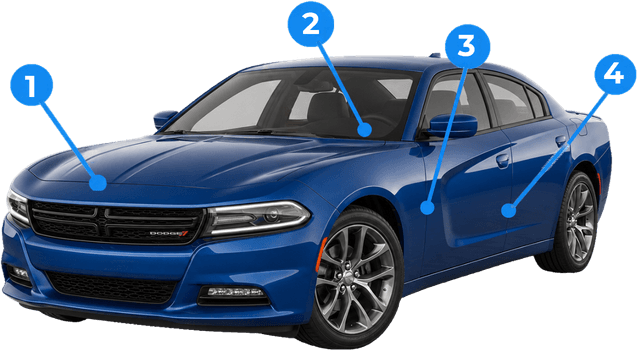
Where to find the VIN
The VIN is 17 characters and never contains I, O or Q. If a listing hides it, that is worth asking about.
Under the hood (front of engine)
Driver’s side interior dash (most common)
Front end of frame (older cars)
Driver’s side door pillar (inside)
Decoding tells you what the vehicle is.History tells you what happened to it.
A VIN decoder identifies available vehicle specifications. A vehicle-history report can help you review available title, odometer, accident and damage, auction, and recall-related information before buying.
VIN decoder questions
A VIN decoder reads a vehicle's 17-character VIN and returns the identity and specification details encoded in it — such as model year, make, model and body style, plus engine and manufacturing information where available.
Yes. Decoding a VIN on this page is free and does not require purchasing a vehicle-history report.
Look at the driver-side dashboard where it meets the windshield, on the driver-side door-jamb label, and on the vehicle's registration, title and insurance documents.
No. A VIN decoder identifies what the vehicle is. It does not show title, accident and damage, odometer, auction or recall information — reviewing that requires a separate vehicle-history report.
The decoder shows only the fields the NHTSA vPIC database returns for a given VIN. Coverage varies by manufacturer, model year and vehicle type, so some fields can be blank.
They are left out because they are easily confused with the numbers 1 and 0. A character that looks like an I or an O in a VIN is actually a 1 or a 0.